

Strengthening Connections: Social Isolation, Divorce and Out-of-Home Care
2.1 Understanding the Context
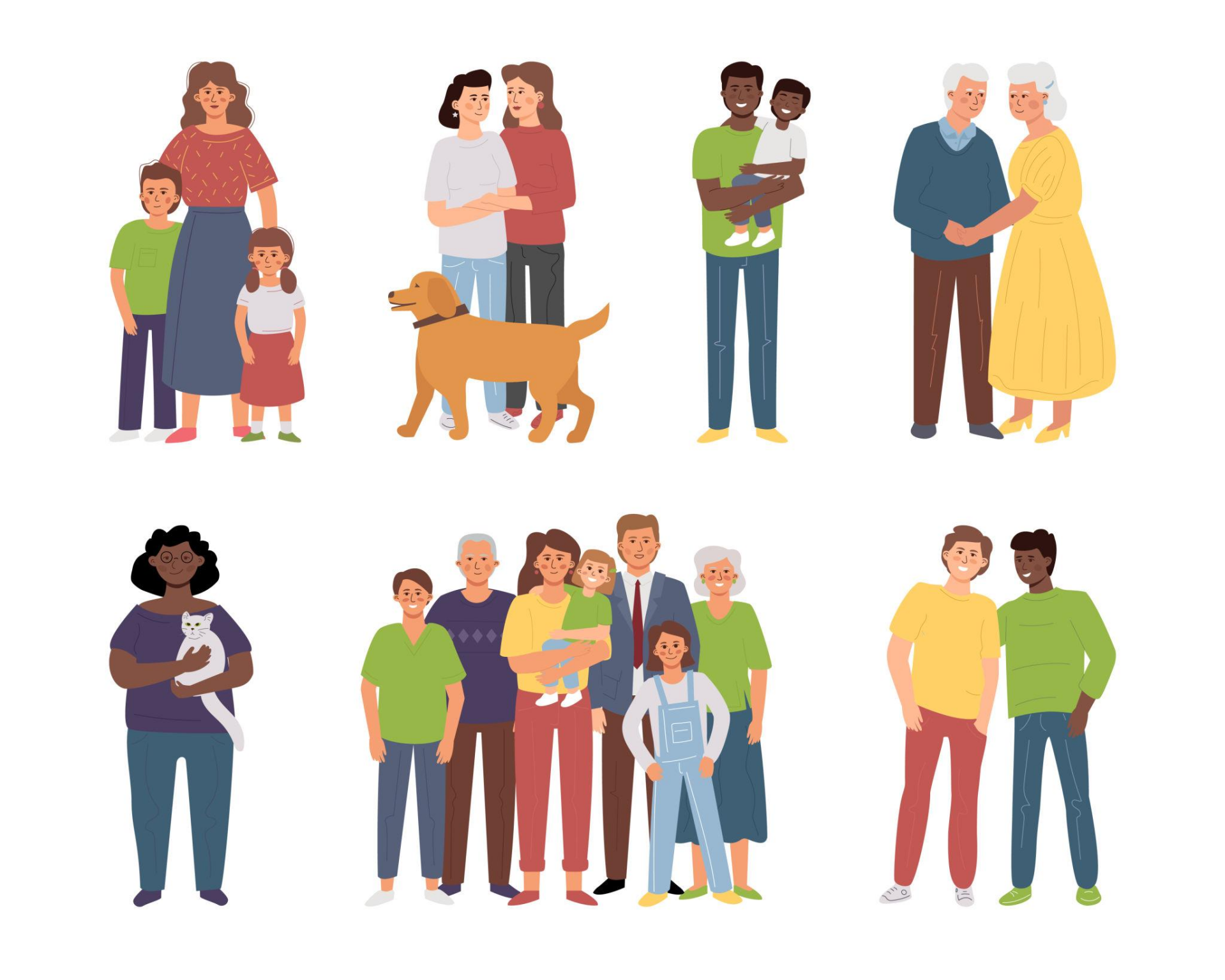
Social environments include family settings, care-giving setups, and community connections that affect the growth of children. The modern-day Australian family consists of single-parent, step-parent, foster, kinship, and scattered families due to changing perceptions about family identity (Australian Institute of Family Studies [AIFS], 2016; McMahon & Grace, 2022).
Social isolation occurs as a result of lack of connections, while geographical isolation is the creation of a barrier. Yet, rural families may have well-developed social networks despite lack of service delivery (Moore et al., 2014).
The ecological systems theory developed by Bronfenbrenner describes how family transitions affect the child's environment while the caregiver-educator relationship affects their mesosystems (Grace et al., 2022). Family Systems Theory highlights that there is an interconnection in family relationships during transition periods (Johnson & Ray, 2016).
Importantly, family diversity is not a form of adversity. Emotional security, quality of relationships and availability of support are more relevant developmental considerations compared to traditional family dynamics (McMahon & Grace, 2022).

2.2 Impact on Children and Families
Being socially isolated could lead to a reduction in peer engagement, language development, and community involvement. The breakup of parents would disrupt the routines, and children in out-of-home care could have faced hardships previously and discontinuity in relationships (Cashmore et al., 2022).
Newborns respond positively to routine care, toddlers need extra emotional support, and preschool-aged children would be required to express themselves and form friendships (Beardslee et al., 2019).
The developmental differences among children in out-of-home care make the need for individual evaluation more pronounced (Goemans et al., 2015).
The protective elements can be found in kinship ties, supportive caregivers, and community ties. The educators need to identify these protective elements rather than pathologizing the child's behaviors and situations (Grace et al., 2022).
There is a need for ECEC services to adapt their methods of communication, transition process, and curricula planning. Flexible service provision becomes especially necessary in cases where geographic barriers prevent accessing professional assistance (Moore et al., 2014).


2.3 Social Policy and Australian Responses
Prevention, early intervention, and family support are key elements in the safe and supported approach for the nation (Commonwealth of Australia, 2021).
The Aboriginal and Torres Strait Islander Child Placement Principle emphasises prevention, collaboration, placement, participation and culture (SNAICC, n.d.).
In New South Wales, inter-agency protocols and reporting conduct set out professional obligations to child safety and wellbeing (NSW Department of Communities and Justice, 2024; NSW Office of the Children's Guardian, 2022).
Australian evidence and implications for practice
Reporting in relation to Australian child protection shows that Indigenous children are still disproportionately represented in placements in care. There are higher numbers of placements in regional and remote areas compared to metropolitan areas (Australian Institute of Health and Welfare, 2026).
This emphasizes the importance of prevention services and maintaining cultural identity and availability of community services. It is essential for educators to recognize and respect the caregiving arrangement and not enforce intervention programs (SNAICC, n.d.).


2.4 Strategies for Practice
Strategy 1: Relationship-based continuity and emotional resilience
Children learn how to cope during transition phases due to their secure relationships and ongoing learning (ACECQA, 2024a, 2024c).
Education professionals collaborate with child care providers that are authorised to comprehend the strengths, interests, and requirements of children while making transitions.
Babies have nurturing experiences, toddlers have visual aids and transitional objects, while preschool-aged children learn emotions through storytelling.
Educator relationships provide consistency. Children have independence and would never be forced to disclose their background stories.
People Who Care for Me project allows babies to experience selected family photos, toddlers to recognize their caregivers and preschoolers to create relationships maps.
Families provide culturally based information and choices. Teachers assess participation, social interaction, and inclusion, changing the setting when there is any discrimination.
This strategy acknowledges families as informed partners despite geographical and organizational constraints.


2.5 Community and Professional Partnerships
2.5 Relationships Australia
1. Relationship Australia
Counseling and relationship support services are provided. Educators provide consent-based referrals, set child-centered goals, and assess children's adjustment processes in a respectful manner (Baker et al., 2022; Relationships Australia, n.d.).
https://www.relationships.org.au/?utm_
2. Caseworkers for out-of-home care
The caseworkers are responsible for arranging the safe care of the children. The educators work together with the authorized carers to ensure the child’s education remains continuous and culture is maintained (Cashmore et al., 2022; SNAICC, n.d.).
2.6 Resources for Educators and Children
Projects, programs and websites
1. Emerging Minds – My Child's Support Network
Relationship mapping enables children to locate the people that they trust and practice help-seeking without having to share personal information (Emerging Minds, n.d.).
https://emergingminds.com.au/resources/childs-support-network/?utm_
2. Raising Children Network – Two Homes After Separation or Divorce
Using visual calendars and telling stories with puppets can foster a sense of emotional security and predictability for the child (Raising Children Network, 2024b).

Two Homes (2–5 years)
Illustrations showing Alex in his various homes portray stable care-giving relationships. Drawing imaginary homes creates emotional security and encourages empathy and acceptance of varied family configurations (Masurel, 2001).

A Heart Can Grow (3-5 Years)
Karli explores relationships and emotions linked to foster care using illustrations. Making heart collages help children appreciate their stable connections and emotions (Sesame Workshop, n.d.-b).

Expressing Feelings (2-5 years)
Abby expresses feelings associated with parental divorce using illustrations. Stories about fictional characters help children learn to express their emotions without revealing personal information (Sesame Workshop, n.d.-d).

A Family Is a Family Is a Family (3-5 years)
The illustrations by Leng portray various types of families. Portraits of inclusive families encourage children to appreciate their connections and celebrate diversity and empathy (O'Leary, 2016).
Professional reflection: Social inclusion involves relational security, acknowledgment of family capacity, cultural continuity, and community partnerships.
Create Your Own Website With Webador